
Ashwagandha for Recovery and Stress: Evaluating the Most Researched Adaptogen
Published:
Written by: Shingo YoshizakiReviewed by: Tomonobu Someda
Does ashwagandha actually reduce stress and help with training recovery?
Ashwagandha (standardized extracts like KSM-66® or Sensoril®) has consistent RCT evidence for reducing cortisol, perceived stress, and anxiety. Modest improvements in muscle strength and mass are also reported. Among adaptogens, it's one of the best-researched options.
RCT-Confirmed Cortisol and Stress Reduction
The ashwagandha-strength-cortisol-RCT in this database and multiple double-blind RCTs confirm that standardized ashwagandha extract (KSM-66® 300–600 mg/day) over 8–12 weeks significantly reduces serum cortisol (by 14–27%) and improves scores on the PSS (Perceived Stress Scale) and HAM-A (Hamilton Anxiety Rating Scale) (Chandrasekhar et al., 2012).
- 14–27%
- cortisol reduction in RCTs
- 300–600 mg/day
- effective dose of standardized extract
Effects on Muscle Strength and Mass
The ashwagandha-strength-cortisol-RCT showed that compared to placebo, the ashwagandha group had significantly greater 1RM improvements in squat (+18.2 kg vs +14.3 kg) and bench press at 8 weeks. Muscle mass (MRI-measured) and recovery markers (serum CK, subjective recovery) also improved. The study targeted beginners to intermediates — effects may be smaller in advanced trainees.
Effects on Sleep Quality
A double-blind RCT by Langade et al. (2019) found that ashwagandha (KSM-66® 300 mg × 2/day for 10 weeks) significantly improved PSQI scores, sleep onset time, sleep efficiency, and morning mood. Indirect recovery benefits through improved sleep quality are also plausible.
Safety and Cautions
Ashwagandha (family Solanaceae) has a high safety profile at standard doses. Minor GI discomfort or drowsiness may occur; serious adverse effects are rare. It may increase thyroid hormone levels — those with thyroid conditions or on related medications should consult a physician. Contraindicated during pregnancy. Choose quality-assured standardized extracts (KSM-66® or Sensoril®) with stated withanolide content.
Related supplements
PR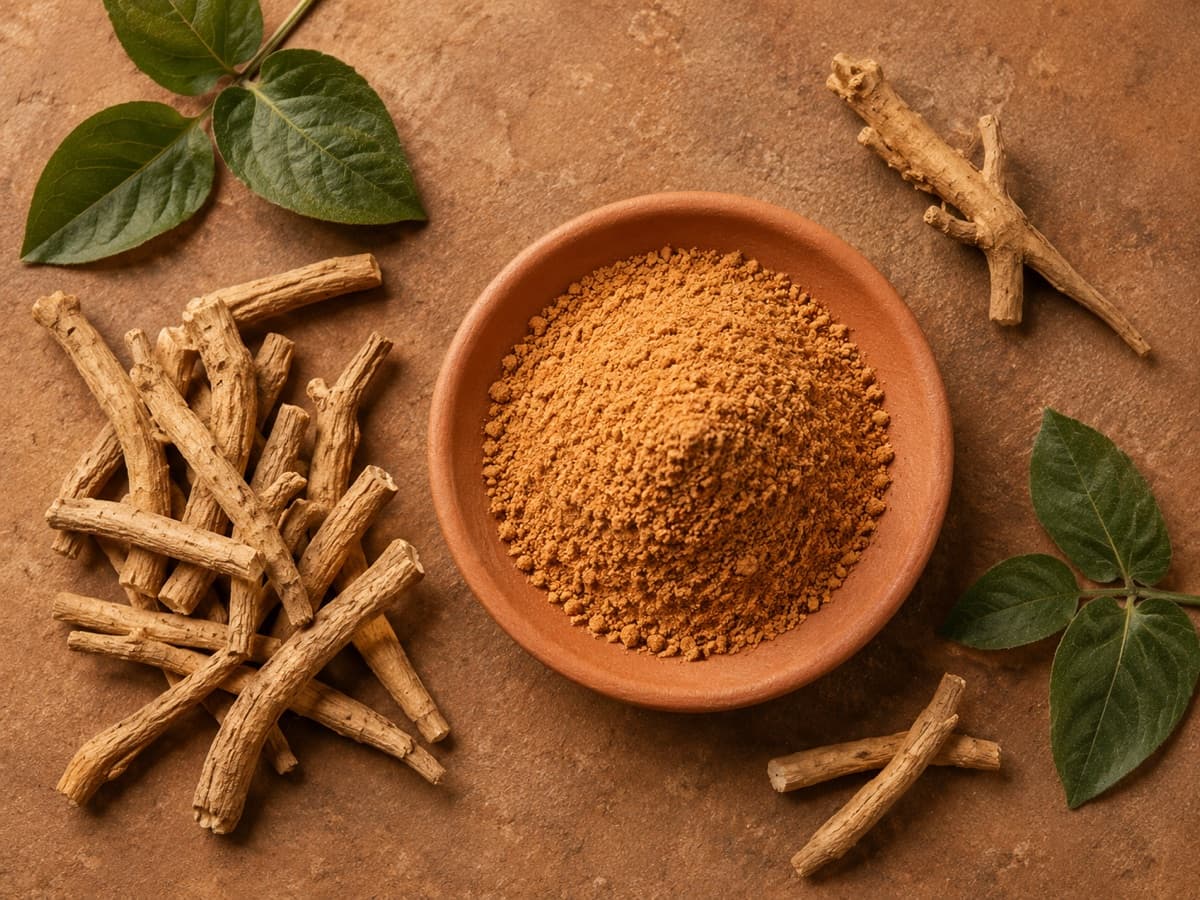 AshwagandhaView in official store
Reduction in cortisol (significant decrease confirmed in studies)
 MagnesiumView in official store
Supports sleep quality and ease of falling asleep when correcting deficiency (confirmed in elderly)
 PhosphatidylserineView in official store
May blunt post-exercise cortisol elevation (modulating excessive stress response)
The links below include affiliate links (PR).
Related research
Sources
Published:
Written by
Shingo YoshizakiSoftware Engineer / Research Writer at BODYDATA
An engineer's job is verification. I read the source before I trust gym lore — same as code.
View profile →
Reviewed by: Tomonobu Someda
Content reviewed from the perspective of coaching practice and supplement-industry experience
Read next
- Research vs Bro-science
Does Ashwagandha Really Boost Testosterone Significantly? The Adaptogen Myth vs. Research
"Ashwagandha spikes testosterone" — bold marketing claims abound. Stress reduction, strength gains, testosterone boost — the expectations for this adaptogen herb are high. What does the research actually show?
Shingo Yoshizaki
- Explainer
Does Phosphatidylserine Lower Cortisol and Aid Recovery? What Research Shows
Phosphatidylserine (PS) at 200–800 mg/day has been shown in multiple RCTs to blunt post-exercise cortisol increases by 10–30%. It broadly dampens cortisol responses to both mental and physical stress, with mood improvement also reported. Direct contributions to hypertrophy or strength, however, are limited.
Shingo Yoshizaki
- Explainer
How Psychological Stress Undermines Training Recovery: The Impact of Work and Life Stress on Muscle Adaptation
Psychological stress elevates cortisol and inflammatory cytokines while suppressing testosterone and growth hormone. Research shows the same training stimulus produces slower recovery and reduced hypertrophy efficiency under high life stress. Managing stress outside the gym is a critical variable for training outcomes.
Shingo Yoshizaki