
Does Ashwagandha Really Boost Testosterone Significantly? The Adaptogen Myth vs. Research
Published:
Written by: Shingo YoshizakiReviewed by: Tomonobu Someda
"Ashwagandha spikes testosterone" — bold marketing claims abound. Stress reduction, strength gains, testosterone boost — the expectations for this adaptogen herb are high. What does the research actually show?
Let the data settle it.
Does ashwagandha produce a large, meaningful increase in testosterone?
What's said
アシュワガンダサプリメーカー・テストステロンブースター系情報
Ashwagandha dramatically spikes testosterone, naturally supercharging male hormone levels and accelerating muscle growth. It's the strongest natural testosterone booster available.
What research says
- Wankhede et al.
- (2015, J Int Soc Sports Nutr) RCT found significant testosterone increases with 600 mg/day for 8 weeks, but effect sizes were moderate (~15–20%), with larger effects in subjects with lower baseline testosterone.
- In healthy men with normal testosterone levels, effects are attenuated.
- The ashwagandha-strength-cortisol-rct data similarly show condition-dependent effects. "Dramatically spiking testosterone" in healthy men with normal levels is an overstatement.
Testosterone increases are real but moderate and condition-dependent. Benefits are more pronounced in low-testosterone or high-stress states. "Dramatic increases" in healthy men is an overstatement.
Does ashwagandha meaningfully reduce stress and cortisol levels?
What's said
サプリ懐疑派・「ハーブは効かない」立場
Herbal supplements can't produce real physiological changes. Ashwagandha's stress-relief effects are purely placebo — the research is industry-funded noise.
What research says
- Chandrasekhar et al.
- (2012) RCT and multiple independent RCTs including ashwagandha-strength-cortisol-rct found that ashwagandha supplementation (KSM-66 or Sensoril) for 8–12 weeks significantly reduced cortisol, perceived stress, and anxiety scores — surpassing placebo in controlled comparisons.
- The effects are not placebo — active compounds (withanolides) are believed to modulate the HPA axis stress response system.
- Sleep quality improvements are also documented in multiple RCTs.
Cortisol reduction, stress relief, and sleep improvement are supported by multiple placebo-controlled RCTs. These effects have stronger evidence than the testosterone-boosting claim.
Related supplements
PR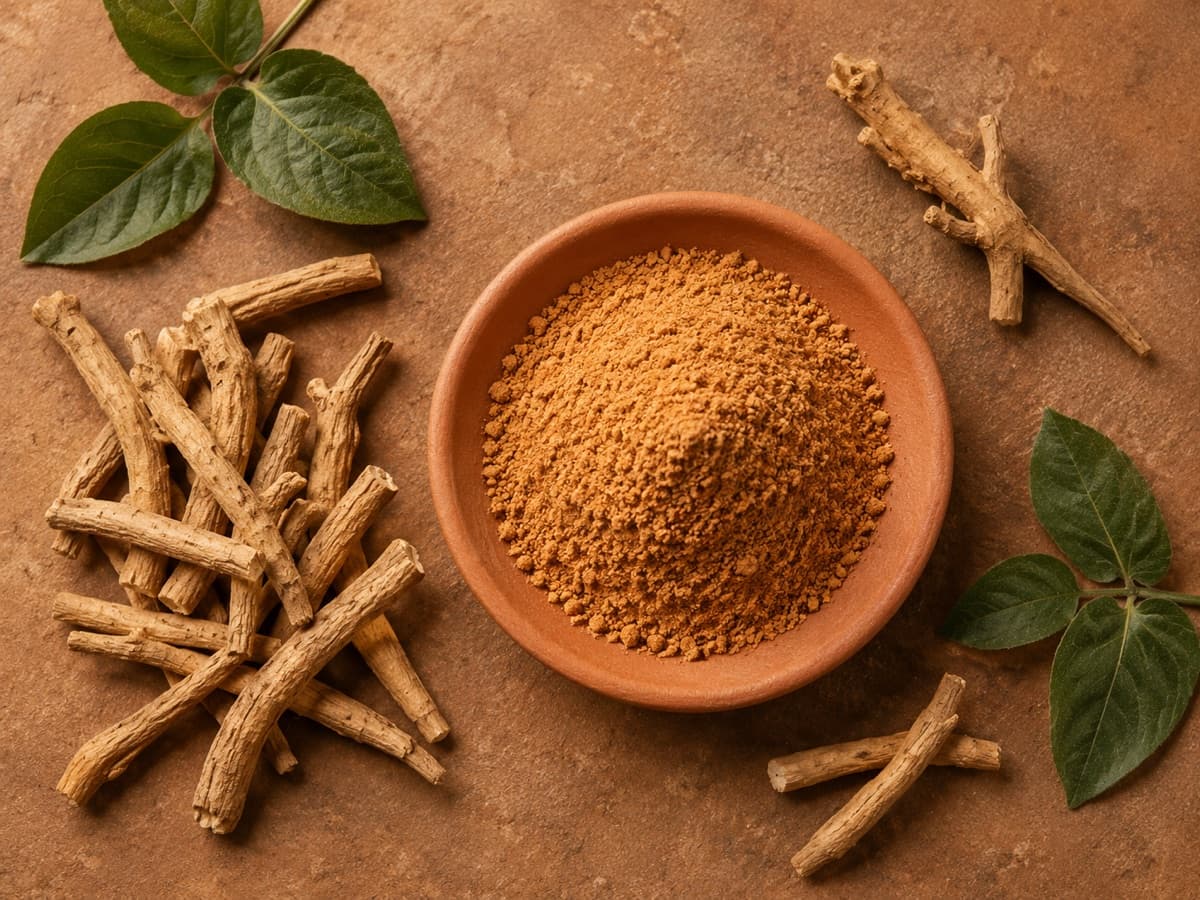 AshwagandhaView in official store
Reduction in cortisol (significant decrease confirmed in studies)
The links below include affiliate links (PR).
Related research
Sources
Published:
Written by
Shingo YoshizakiSoftware Engineer / Research Writer at BODYDATA
An engineer's job is verification. I read the source before I trust gym lore — same as code.
View profile →
Reviewed by: Tomonobu Someda
Content reviewed from the perspective of coaching practice and supplement-industry experience
Read next
- Research vs Bro-science
Does Stress Really Cause Belly Fat? Cortisol and Body Fat vs. Research
"Stress causes belly fat" and "you can't lose weight until you lower cortisol" are widespread claims in diet culture. Let's examine what the research actually shows about stress hormones and body fat.
Shingo Yoshizaki
- Research vs Bro-science
Does Stress Really Melt Your Muscles? The Cortisol Myth vs. Research
"Cortisol breaks down muscle" — widely known, but does that mean training-induced cortisol is harmful? Does work stress dissolve your gains? The impact of acute vs. chronic cortisol elevation on hypertrophy is very different.
Shingo Yoshizaki
- Research vs Bro-science
Does Soy Lower Men's Testosterone? The Phytoestrogen Myth vs. Research
"Soy isoflavones are phytoestrogens that lower testosterone in men" — this claim has become dogma in lifting communities. Should you avoid tofu, soy milk, and soy protein? Let's look at what the research actually shows.
Shingo Yoshizaki