
What Is Leucine? The Muscle-Building "Trigger" Amino Acid — and Its Limits
Published:
Written by: Hirotsugu YoshimuraReviewed by: Tomonobu Someda
What exactly is leucine — and does more of it mean more muscle?
Leucine is an essential amino acid the body can't make on its own, and within the BCAAs (branched-chain amino acids), it's considered the main trigger for muscle protein synthesis. Roughly 2–3 g per meal is often cited as the amount needed to flip that switch, though the existence of a hard threshold is itself debated in the research. And leucine alone isn't enough — without the other essential amino acids, synthesis can't be sustained.
What leucine is: the "trigger" among the BCAAs
Leucine is one of nine essential amino acids the body cannot synthesize on its own, and together with valine and isoleucine it makes up the BCAAs (branched-chain amino acids). Among the three, leucine is considered to play the strongest role in activating the mTORC1 pathway after exercise — effectively flipping the switch on muscle protein synthesis (the process that builds new muscle protein).
The "leucine threshold" hypothesis — and the debate around it
Roughly 2–3 g of leucine per meal has been proposed as the amount needed to strongly stimulate muscle protein synthesis (Norton & Layman, 2006). But a 2021 systematic review examining 29 studies (31 comparisons) found the evidence split almost down the middle: 16 comparisons supported the hypothesis, 15 did not. Support skewed toward studies in older adults and isolated proteins (like protein powders); in young adults and whole foods (milk, meat), the existence of a hard threshold is far less clear.
- 2–3 g
- Amount often proposed per meal
- 16 vs. 15
- Study comparisons supporting vs. not supporting
Leucine alone doesn't sustain synthesis: a materials problem
In an RCT of men after resistance exercise, adding leucine to a small 6.25 g whey dose (matching the leucine content of a 25 g whey dose) raised muscle protein synthesis to the same level as the full 25 g dose during hours 1–3. But only the full 25 g protein condition kept synthesis elevated through hours 3–5 — the leucine-matched low dose plateaued. Leucine can flip the switch, but without enough of the other essential amino acids as raw material, synthesis can't be sustained. This is one reason standalone BCAA supplements tend to underdeliver on hypertrophy (see our related pieces on whether BCAA works and whether EAA beats BCAA).
Roughly how much leucine is in common foods
The share of leucine within a protein's total amino acids varies by source. A compositional analysis (using an animal feeding model) reported leucine content per unit protein weight of about 10.9% for whey, 8.8% for egg, 8.0% for soy, and 6.8% for wheat. A separate human RCT found a very similar figure for whey (~11%), higher than casein (~9.3%) and soy (~8%). One scoop of whey protein (20–30 g powder, roughly 16–24 g protein) works out to about 1.7–2.6 g of leucine on paper — in the ballpark of the 2–3 g figure discussed above. Note this is a calculated estimate from percentage composition, not a directly measured value for any specific product.
Related supplements
PR BCAA (Branched-Chain Amino Acids)View in official store
Reduction in DOMS: Multiple studies report decreases in post-resistance-exercise muscle soreness and muscle damage markers
 EAA (Essential Amino Acids)View in official store
Research reports promotion of muscle protein synthesis in individuals who train
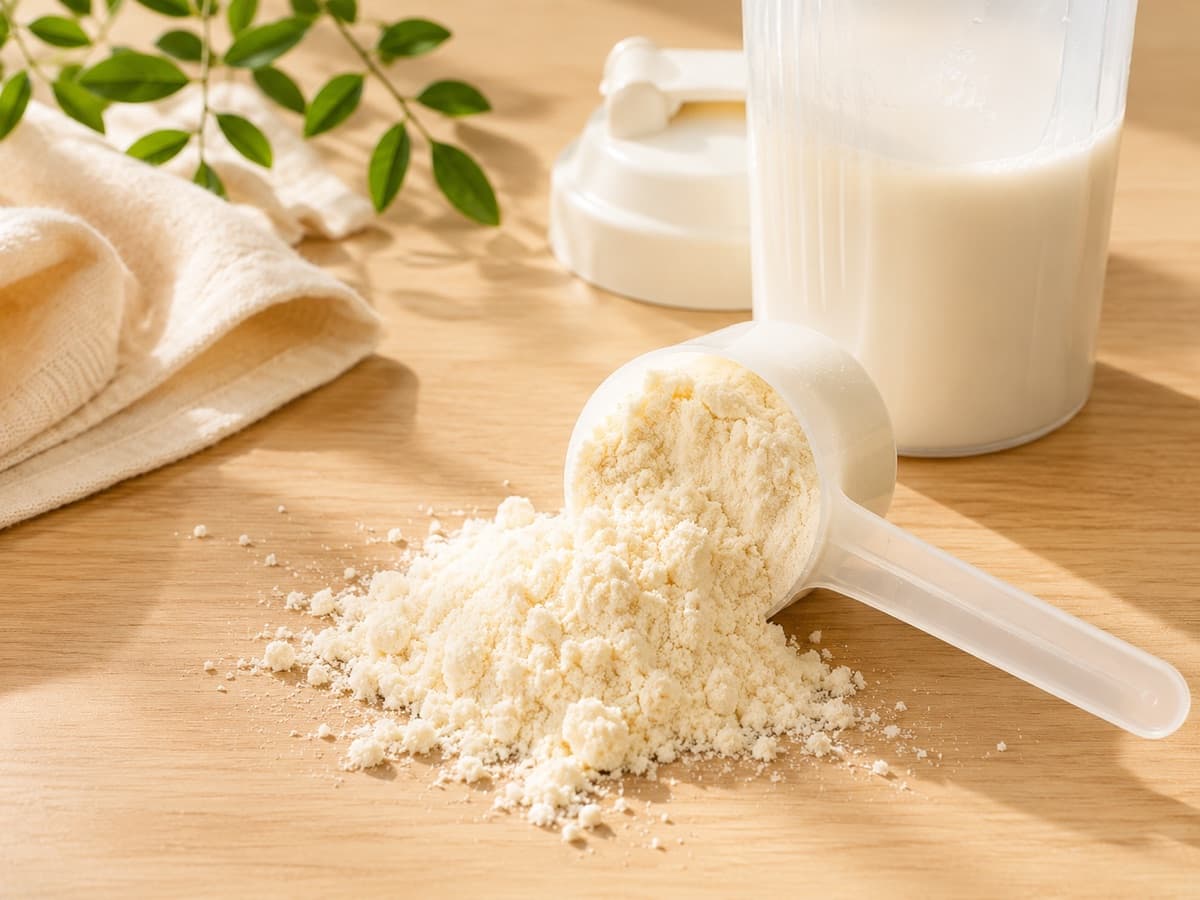 Whey ProteinView in official store
Helps you reach total daily protein
The links below include affiliate links (PR).
Related research
Sources
- Norton LE & Layman DK (2006) The Journal of Nutrition — leucine trigger hypothesis
- Zaromskyte G, et al. (2021) Front Nutr — ロイシン閾値仮説の検証:系統的レビュー
- Churchward-Venne TA, et al. (2012) The Journal of Physiology — leucine-enriched low-dose whey RCT
- Norton LE, et al. (2012) Nutrition & Metabolism — leucine content of dietary proteins
- Tang JE, et al. (2009) Journal of Applied Physiology — whey/casein/soy leucine content and MPS
Published:

Written by
Hirotsugu YoshimuraFounder of BODYDATA / CEO of INVOLVE
I don't pick things because they "seem good." I check the data first, then test it with my own body.
View profile →
Reviewed by: Tomonobu Someda
Content reviewed from the perspective of coaching practice and supplement-industry experience
Read next
- Research vs Bro-science
"High-Fructose Corn Syrup Is Bad Because It's an Isomerized Sugar" — Is It True? Comparing It to Table Sugar
"Isomerized sugar (fructose-glucose syrup) is an industrially manufactured, unnatural sugar, so it's worse for you than regular sugar" is a claim heard especially often in Japan. We check what research actually shows about the 'it's free sugar so it's absorbed faster' reasoning and the 'it's industrially made so it's dangerous' reasoning.
Shingo Yoshizaki
- Research vs Bro-science
"High-Fructose Corn Syrup Is Worse for Your Liver Than Regular Sugar" — Is It True? Fructose Metabolism vs. Research
"High-fructose corn syrup is worse for your liver than regular sugar" is a claim you'll see often on social media and health sites. Research linking fructose metabolism to fatty liver certainly exists, but much of it doesn't directly compare high-fructose corn syrup against sucrose (table sugar). Here's what the evidence actually shows, accounting for the differences between studies.
Shingo Yoshizaki
- Explainer
Does the Fructose-Glucose Syrup in Sports Drinks Help During Exercise?
Glucose and fructose are absorbed via separate intestinal transporters, so combining them lets the body use more carbohydrate faster than a single sugar source alone. A single carbohydrate's utilization rate (oxidation) caps at roughly 60 g/hour, while a glucose-fructose mix can push this to around 90-105 g/hour. Most of this evidence, however, comes from prolonged endurance exercise lasting over 2 hours, and doesn't necessarily transfer directly to a shorter resistance-training session.
Shingo Yoshizaki