
Creatine
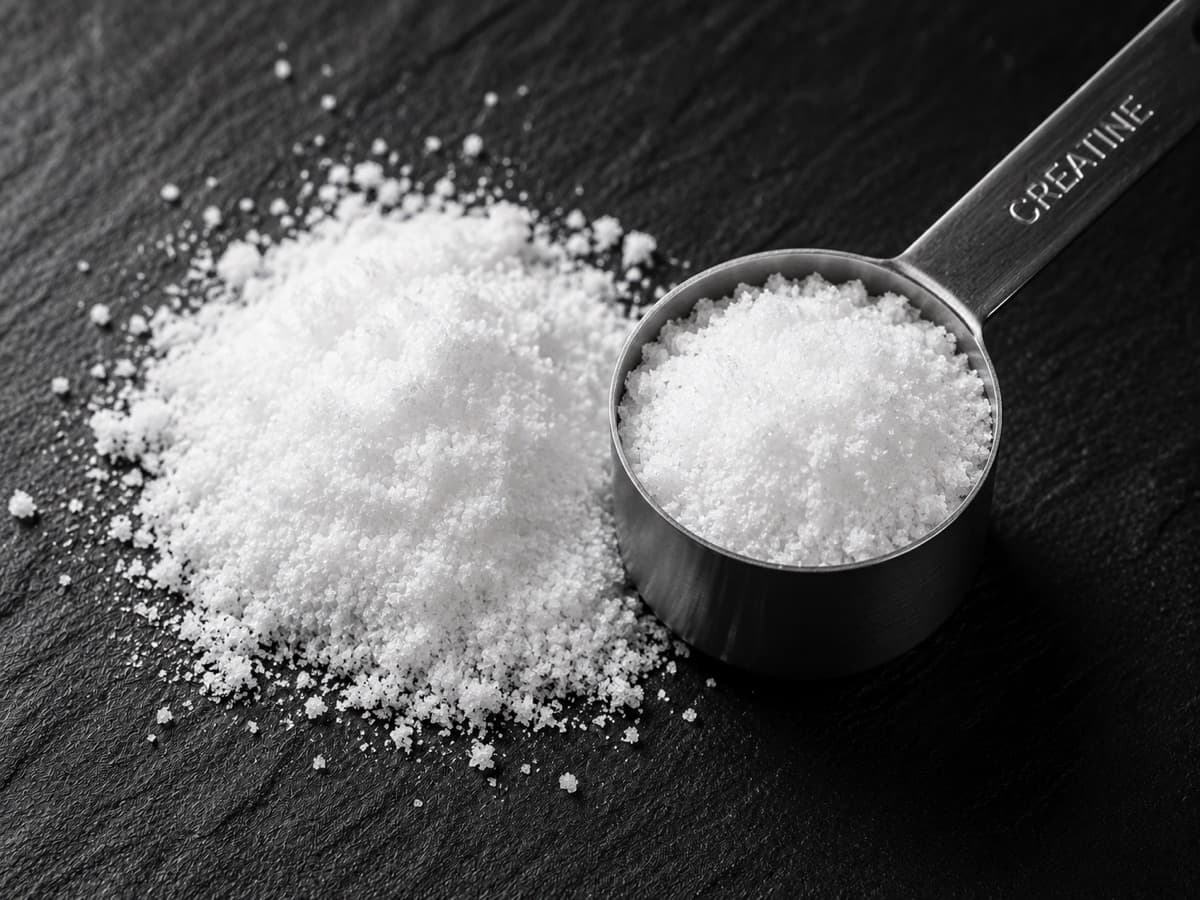
One of the most studied supplements, with strong evidence for efficacy and safety. Supports high-intensity performance and gains in lean mass and strength during resistance training.
A well-studied, foundational ingredient
Buy
(PR)The links below include affiliate links (PR).
Effects reported in research
Improved high-intensity, repeated-effort performance
Added lean-mass and strength gains with resistance training
Possible cognitive benefits under investigation
Dosage & timing
- 3–5 g/day.
- Loading is optional; 5 g × 4/day for 5–7 days saturates stores faster.
Cautions
- •Considered safe in people with normal kidney function; consult a doctor if you have kidney disease.
- •A small initial weight increase from water retention is common.
Supporting research
Similar supplements
Creatine HCl
Confidence: ModerateCreatine hydrochloride (Creatine HCl)
Creatine bound to hydrochloric acid for improved water solubility. Marketed as effective at smaller doses (1–2 g), but head-to-head comparisons with monohydrate are limited, and cost-effectiveness is lower.
Betaine (Trimethylglycine)
Confidence: ModerateBetaine (Trimethylglycine, TMG)
Betaine is an amino acid derivative that acts as a methyl donor involved in creatine synthesis. Multiple RCTs have reported improvements in upper-body strength and muscle power, though results for lower-body outcomes are mixed. Cardiovascular benefits via homocysteine reduction are also under investigation.
EAA (Essential Amino Acids)
Confidence: ModerateNine essential amino acids: leucine, isoleucine, valine, lysine, methionine, phenylalanine, threonine, tryptophan, and histidine
A product containing all nine essential amino acids that the body cannot synthesize on its own. Research suggests that having the full complement of essential amino acids available is advantageous for muscle protein synthesis. BCAAs alone may leave other essential amino acids in short supply, and EAA is thought to provide a more complete substrate.
Last checked: