
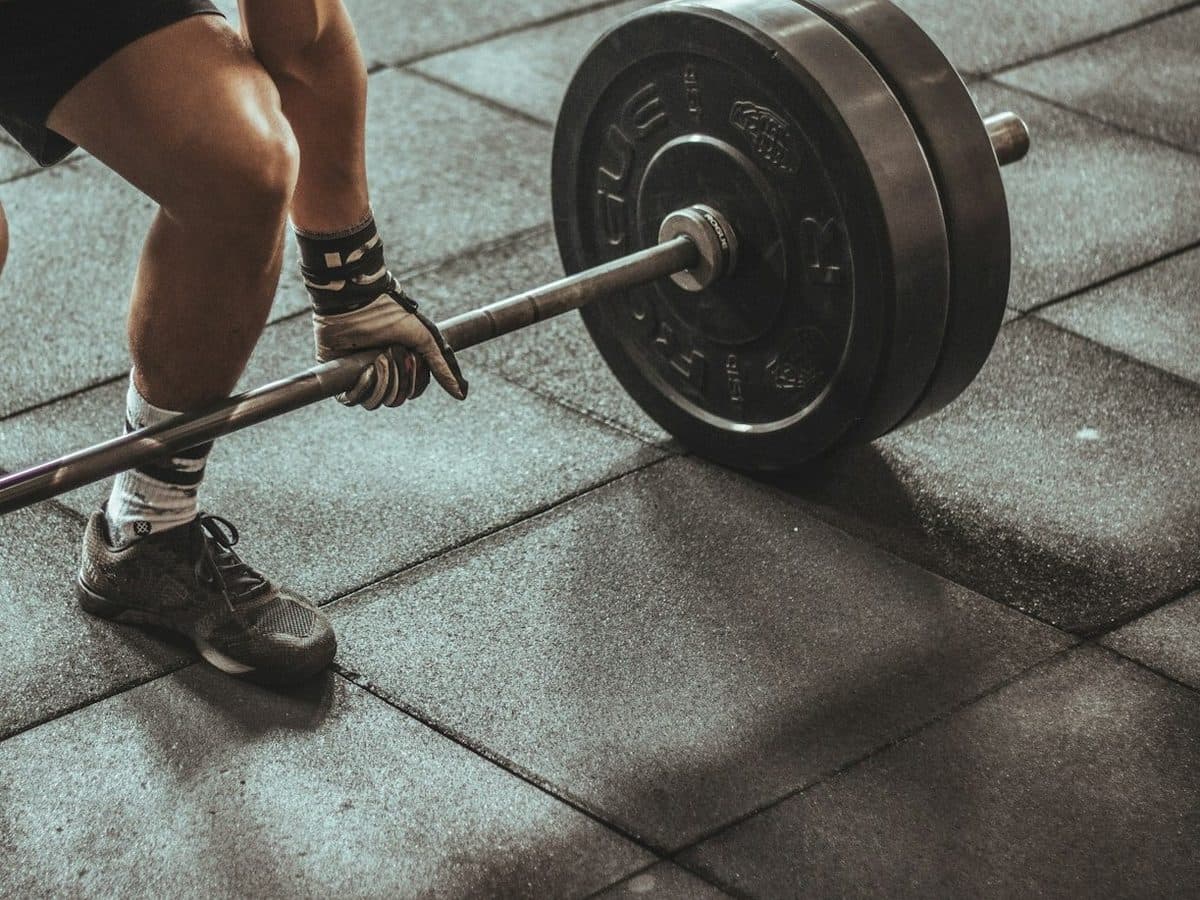
Deadlift vs Squat: Which Should You Prioritize? A Research-Based Answer by Goal
Published:
Written by: Shingo YoshizakiReviewed by: Tomonobu Someda
The debate over squats versus deadlifts never seems to end: 'squats are the king of all exercises,' 'deadlifts train legs too, so squats are redundant,' 'you only need one of them.' Let's compare the actual research on both lifts and determine priority by goal.
Let the data settle it.
Deadlifts alone are enough to train the quadriceps
What's said
デッドリフト重視派のトレーニー、一部のパワーリフター
Deadlifts train the entire leg. Since they use the same muscles as squats, you only need one of the two.
What research says
- EMG comparison studies of conventional deadlifts and squats (Escamilla et al., 2000) show significantly higher quadriceps activation (rectus femoris, vastus lateralis) during squats, while deadlifts favor hip extensors (gluteus maximus, hamstrings).
- Deadlifts alone are insufficient for thorough quadriceps development.
For thorough quadriceps development, deadlifts alone are insufficient. Combining with squats (or leg press, Bulgarian split squats, etc.) balances front-to-back leg development.
Squats are more effective than deadlifts for overall strength and general health
What's said
スクワット重視の指導者、一般フィットネスメディア
Squats are the most efficient exercise for the lower body, core, and whole body. Deadlifts are dangerous for the lower back, so squats alone are enough for most people.
What research says
- Squats and deadlifts are complementary exercises that emphasize different muscle groups — neither is objectively superior.
- Research shows deadlift injury risk is not higher than other heavy compound lifts when performed with proper form (Berglund et al., 2015).
- For overall strength and longevity, including both in a program is recommended.
Combining both outperforms using only one. Priority by goal: lower-body hypertrophy → squats; hamstrings, glutes, and back → deadlifts; balanced whole-body development → both equally.
Related supplements
PR CreatineView in official store
Improved high-intensity, repeated-effort performance
 Whey ProteinView in official store
Helps you reach total daily protein
The links below include affiliate links (PR).
Related research
- Dose-response relationship between weekly sets (training volume) and hypertrophy (systematic review)2017
- A review of resistance training-induced changes in skeletal muscle protein synthesis and their contribution to hypertrophy2015
- Muscle-strengthening exercise and all-cause mortality and longevity: a meta-analysis of prospective cohort studies2022
Sources
Published:
Written by
Shingo YoshizakiSoftware Engineer / Research Writer at BODYDATA
An engineer's job is verification. I read the source before I trust gym lore — same as code.
View profile →
Reviewed by: Tomonobu Someda
Content reviewed from the perspective of coaching practice and supplement-industry experience
Read next
- Research vs Bro-science
Do You Really Need a Lifting Belt? The 'No Belt = Injury' Claim vs Research
You'll often hear that 'a belt is a lifeline — squatting or deadlifting without one is dangerous.' But you'll just as often hear the counter: 'belts weaken your core' or 'you don't need one.' Let's examine the main claims around lifting belts against the research evidence.
Shingo Yoshizaki
- Explainer
The Valsalva Maneuver and Intra-Abdominal Pressure: How Breathing Technique Unlocks More Strength
The Valsalva maneuver — holding your breath and bracing to increase intra-abdominal pressure — is an effective technique that enhances both safety and performance on heavy compound lifts. However, it temporarily causes a sharp blood pressure spike, so anyone with cardiovascular disease or hypertension should consult a physician first.
Shingo Yoshizaki
- Research vs Bro-science
Do You Actually Need Weightlifting Shoes? The 'No Heels, No Depth' Claim vs Research
Weightlifting shoes with elevated heels are said to increase squat depth and allow a more upright torso, earning them a following among strength athletes. Others argue you should develop the mobility to squat without heel elevation. Let's sort through the evidence.
Shingo Yoshizaki