

"Can't Build Muscle After 40" — Myth or Reality? Aging vs. the Research
Published:
Written by: Shingo YoshizakiReviewed by: Tomonobu Someda
"I'm too old to build muscle" — a common refrain from trainees in their 40s and 50s. Testosterone and growth hormone do decline with age. But is the muscle-building window actually closed? The research says otherwise.
Let the data settle it.
Can adults in their 40s and 50s still build meaningful muscle with resistance training?
What's said
一般的な加齢に関する通説・フィットネス文化
Testosterone was high in your 20s, making muscle growth easy. After 40, testosterone drops and muscle building becomes essentially futile. Heavy training just risks injury at that age.
What research says
- Peterson et al.
- (2010) meta-analyzed 47 studies (1,079 participants, mean age 60+) and found significant strength gains (25%+) and muscle hypertrophy in older adults with resistance training.
- Relative hypertrophy rates (%gain) did not differ significantly from younger adults.
- Lower testosterone affects absolute muscle mass ceilings but does not eliminate the muscle protein synthesis response to training.
Muscle hypertrophy is achievable in your 40s and 50s. Declining testosterone lowers the ceiling but doesn't eliminate the response to training.
Should older adults stick to light weights and low intensity?
What's said
シニア向けフィットネス情報・一般的な安全配慮の通説
Heavy lifting is dangerous for older adults. Light weights, high reps, and slow tempos are safer and just as effective. High-intensity training isn't appropriate at that age.
What research says
- Peterson et al.
- (2010) found moderate-to-high intensity (60–80%+ of 1RM) to be most effective in older adults.
- Light loads can also produce hypertrophy (per rep-range research), but moderate-to-high intensity is recommended for strength, bone density, and functional independence.
- The key adjustments for older adults are exercise form, distributing volume across more sessions, and allowing adequate recovery — not avoiding intensity per se.
Moderate-to-high intensity training is effective and appropriate for older adults. The key adjustments are form, recovery, and volume distribution — not simply reducing intensity.
Related supplements
PR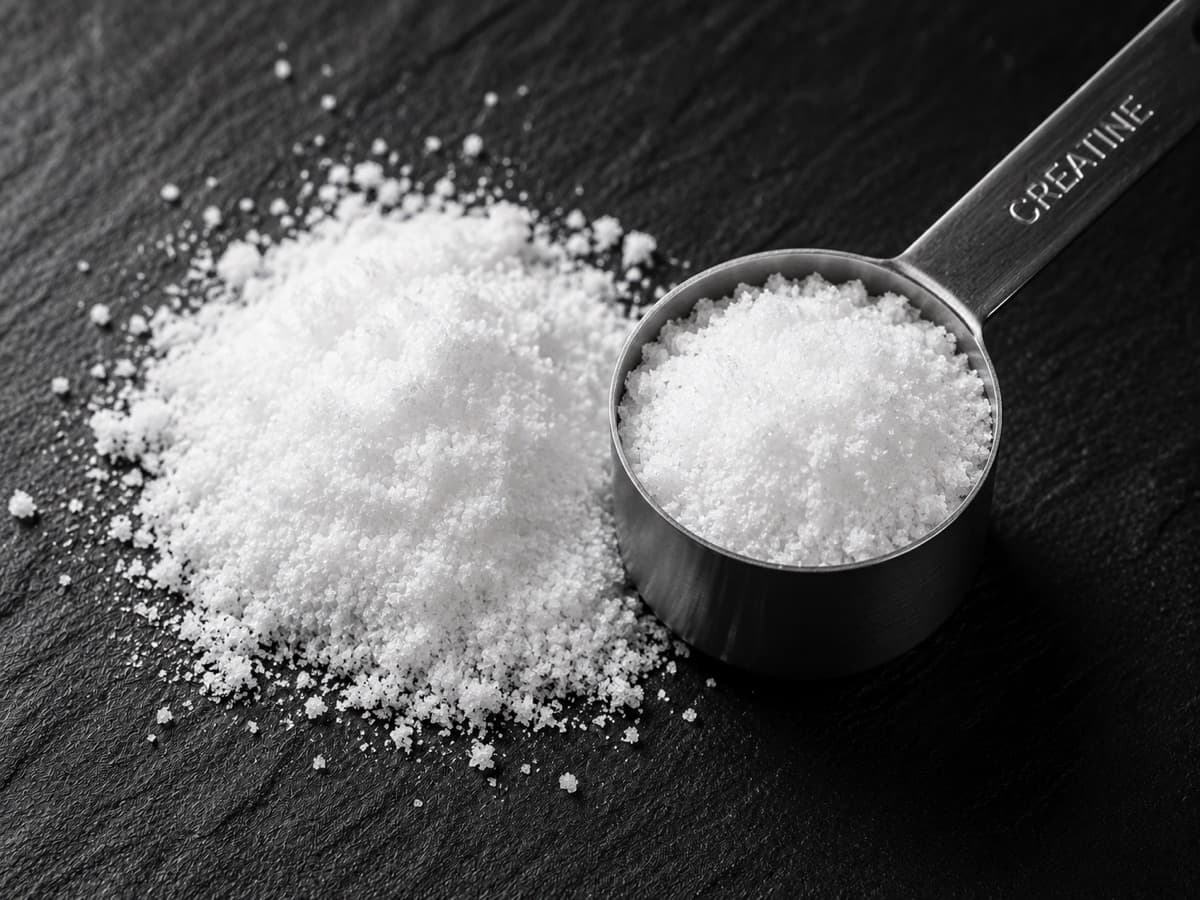 CreatineView in official store
Improved high-intensity, repeated-effort performance
The links below include affiliate links (PR).
Related research
- Resistance exercise for muscular strength in older adults: A meta-analysis2010
- Dose-response relationship between weekly sets (training volume) and hypertrophy (systematic review)2017
- Strength and Hypertrophy Adaptations Between Low- vs. High-Load Resistance Training: A Systematic Review and Meta-Analysis2017
Sources
Published:

Written by
Shingo YoshizakiSoftware Engineer / Research Writer at BODYDATA
An engineer's job is verification. I read the source before I trust gym lore — same as code.
View profile →
Reviewed by: Tomonobu Someda
Content reviewed from the perspective of coaching practice and supplement-industry experience
Read next
- Research vs Bro-science
"I Got Stronger in 2 Weeks" — Is That Muscle or Something Else? Training Timeline vs. Research
Many new lifters feel noticeably stronger after 2–3 weeks. But what's actually changing? How long until real muscle hypertrophy — an increase in muscle cross-sectional area — actually occurs? The research timeline differs from gut feeling.
Shingo Yoshizaki
- Research vs Bro-science
Will Women Get "Bulky" from Weight Training? The Masculinization Myth vs. Research
"Heavy lifting will make me look manly" — this fear still keeps many women out of the weight room. But the physiology of female muscle development tells a very different story.
Shingo Yoshizaki
- Research vs Bro-science
Does Training More Often Mean More Gains? High Frequency vs. What the Research Shows
"Hit the same muscle group three or more times a week and your gains will accelerate" — it's advice repeated across social media and YouTube channels. The logic sounds intuitive, but does simply training more often actually produce more results? When you factor in total volume and recovery, the picture turns out to be more nuanced.
Shingo Yoshizaki