
Plyometric Training for Explosive Power: The Science Behind Jumps, Sprints, and Sport Performance
Published:
Written by: Shingo YoshizakiReviewed by: Tomonobu Someda
Can jump-based plyometric training actually improve explosive power and sprint performance?
Plyometrics — explosive movements like jumps, hops, and bounds that exploit the stretch-shortening cycle — have been shown in meta-analyses to significantly improve jump height, sprint speed, and sport-specific power. Programs of 2–3 sessions per week over 8–12 weeks consistently produce measurable gains.
What Is the Stretch-Shortening Cycle (SSC)?
Muscles produce maximum force immediately after being stretched — this is the stretch-shortening cycle (SSC). Elastic energy is stored in tendons during the lengthening phase and released explosively during the shortening phase. Plyometric training repeatedly practices this cycle to improve neuromuscular reaction speed and elastic energy utilization.
What the Research Shows: Effect Sizes from Meta-Analyses
Multiple meta-analyses, including those by Meylan & Malatesta (2009) and Rønnestad & Mujika (2014), show plyometric training improves vertical jump height by an average of 4–8% and produces significant improvements in sprint times (10–30 m). Effect sizes (ES d = 0.5–0.9) are typically classified as moderate to large.
- +4–8%
- improvement in vertical jump
- d = 0.5–0.9
- effect size of plyometric training
How to Design an Effective Plyometric Program
① Train 2–3 times per week. ② Set session foot-contact targets: 80–100 for beginners, 120–150 for intermediate, and up to 200 for advanced trainees. ③ Start with low-intensity bilateral jumps and progress to single-leg, deep-landing, and directional-change drills. ④ Allow 2–3 minutes between sets to prioritize neural recovery.
Combining with Strength Training for Synergistic Gains
Combining resistance training with plyometrics in 'complex training' (e.g., squats immediately followed by jumps) leverages Post-Activation Potentiation (PAP) to produce greater power gains than either modality alone. When combining in a single session, strength work should precede plyometrics.
Related supplements
PR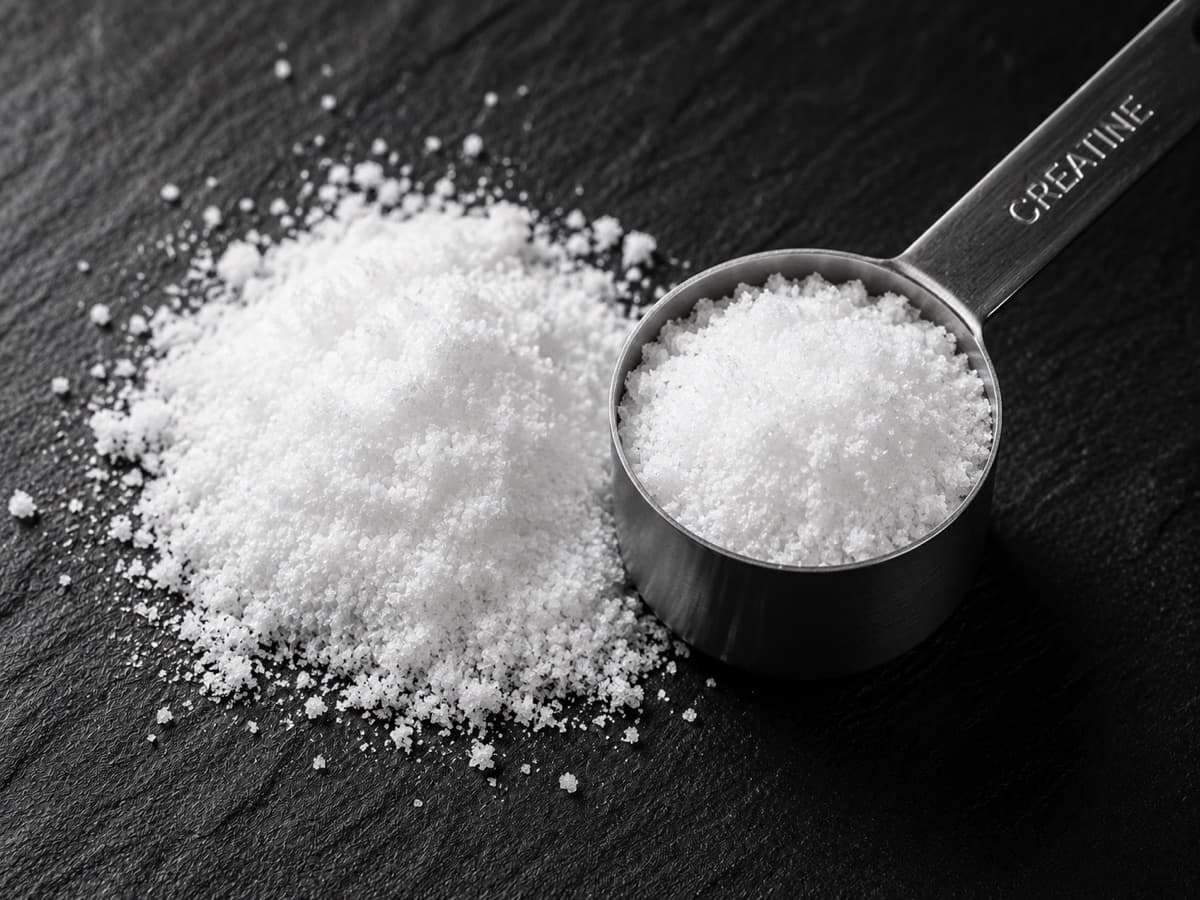 CreatineView in official store
Improved high-intensity, repeated-effort performance
 CaffeineView in official store
Small gains in maximal strength and power
The links below include affiliate links (PR).
Related research
- Effects of plyometric training on muscular power and sports performance: a meta-analysis2012
- Concurrent training interference effect on muscle hypertrophy and strength: a meta-analysis2012
- A review of resistance training-induced changes in skeletal muscle protein synthesis and their contribution to hypertrophy2015
Sources
Published:
Written by
Shingo YoshizakiSoftware Engineer / Research Writer at BODYDATA
An engineer's job is verification. I read the source before I trust gym lore — same as code.
View profile →
Reviewed by: Tomonobu Someda
Content reviewed from the perspective of coaching practice and supplement-industry experience
Read next
- Explainer
Unilateral Training for Strength: From Fixing Imbalances to Boosting Athletic Performance
Unilateral training excels at correcting imbalances, reducing fall risk, and improving sport-specific power. For hypertrophy and maximum strength it's roughly equivalent to or slightly inferior to bilateral training, but it adds complementary value by simultaneously developing functional strength, balance, and core stability.
Shingo Yoshizaki
- Explainer
Electrolyte Supplement Guide: Hydration, Mineral Replenishment, and Muscle Cramp Prevention During Exercise
Research shows that for intense exercise exceeding 60 minutes, sports drinks containing electrolytes (sodium, potassium, magnesium) outperform water alone for maintaining performance. Dehydration exceeding 2% of body weight significantly impairs exercise capacity, and sodium loss from prolonged sweating increases muscle cramp risk.
Shingo Yoshizaki
- Research vs Bro-science
Do You Really Need a Lifting Belt? The 'No Belt = Injury' Claim vs Research
You'll often hear that 'a belt is a lifeline — squatting or deadlifting without one is dangerous.' But you'll just as often hear the counter: 'belts weaken your core' or 'you don't need one.' Let's examine the main claims around lifting belts against the research evidence.
Shingo Yoshizaki