
ガーリック(ニンニク)
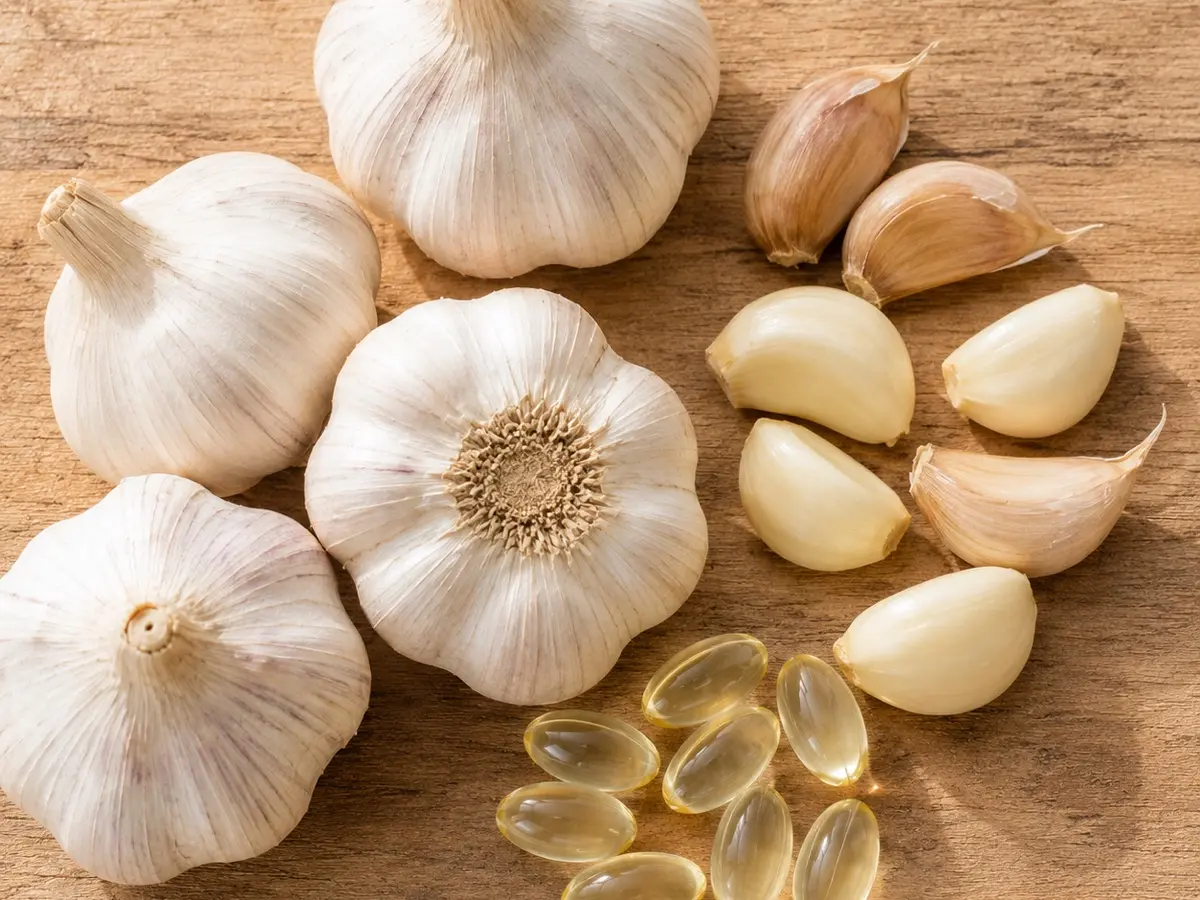
食品としても使われる球根。108件のRCT・計7,137名を統合したメタ分析で、血圧・脂質・血糖・炎症マーカーの改善が報告されている。ただし効果量は小さく(収縮期血圧 −3.71 mmHg、LDL −5.90 mg/dL)、著者らは「とくにベースラインのリスク因子が不良な成人で」改善が見られたとしている。体重・BMIには影響が無い。
研究が進みつつある成分
購入する
(PR)研究で報告されている効果
血圧が下がった。 収縮期血圧が加重平均差 −3.71 mmHg(95%CI −5.07〜−2.36)、拡張期血圧が −1.97 mmHg(95%CI −2.86〜−1.08)(Behrouz 2026)。
脂質が改善した。 中性脂肪 −5.82 mg/dL(95%CI −8.16〜−3.49)、総コレステロール −10.21 mg/dL(−13.69〜−6.74)、LDLコレステロール −5.90 mg/dL(−10.51〜−1.29)、HDLコレステロール +2.18 mg/dL(1.49〜2.87)(Behrouz 2026)。
血糖に関わる指標も改善した。 空腹時血糖 −2.77 mg/dL(95%CI −5.25〜−0.28)、インスリン −1.74 mU/L(−2.26〜−1.22)、HOMA-IR −0.37(−0.59〜−0.15)(Behrouz 2026)。
アポリポプロテインA-1・B、ALT、インターロイキン-6、BMI、体重、アディポネクチンには影響が無かった(いずれもP≧0.05)(Behrouz 2026)。
著者らは「とくにベースラインのリスク因子が不良な成人で」改善が見られたとし、「決定的な結論を導くには、より大きな標本・より長い追跡・より厳密な方法論を伴う研究が必要」としている(Behrouz 2026)。
免疫強化・抗菌・抗ウイルス作用、アリシンの寄与、熟成黒ニンニクエキスや腸溶性カプセルの違いについて、本サイトは出典を示せない。
推奨摂取量・タイミング
- 収録したメタ分析は用量・期間・介入の種類でサブグループ解析を行っているが、抄録は各群の値を報告していない。用量を決められる出典を、本サイトは示せない(Behrouz 2026)。
- 「アリシン換算で1日2〜5mg(生ニンニク1〜2片相当)」という目安についても同様である。
注意点
- •安全性・副作用について、本サイトは出典を示せない。 収録したメタ分析は心血管リスク因子を扱ったもので、有害事象を主題としていない。
- •血圧・血糖・血液凝固に関わる薬を服用中の方は、使用前に必ず医師または薬剤師に相談すること。 収録したメタ分析では血圧と血糖の低下が報告されている。
似た働きのサプリ
アルギニン
信頼度: 低L-アルギニン
アミノ酸の一種。血圧については22件のメタ分析で低下が報告されている(収縮期 −6.40 mmHg)。ただし1日9gを超える用量、24日を超える期間、肥満者では有意な変化が見られていない。 一方、持久性パフォーマンスを調べたメタ分析(118件)は、L-アルギニンを含む食品の研究を組み入れ基準に挙げながら、実際に統合されたのはポリフェノール・硝酸塩・L-シトルリンの研究のみだった。
ナイアシン(ビタミンB3)
信頼度: 中ニコチン酸(ナイアシン)
ビタミンB3の酸形態(ニコチン酸)。脂質については、2型糖尿病患者を対象とした8件のRCT・計2,110名のメタ分析で、総コレステロール・中性脂肪・LDLの低下とHDLの上昇が報告されている。一方、著者らは感度分析とサブグループ解析から「血糖とHbA1cに有害な影響を及ぼす可能性がある」と明記し、高用量は慎重に投与すべきだとしている。 対象は2型糖尿病の患者であり、健常者ではない。
リチウム(低用量)
信頼度: 未評価オロチン酸リチウムまたはアスパラギン酸リチウム
微量のリチウムを含むサプリ(オロチン酸リチウムなど)。本サイトは、この用量帯のサプリを評価したヒトの研究を1件も収録できていない。有効性・用量・安全性のいずれも判断材料を示せないため、このページに購入導線を置いていない。 リチウムは精神科で用いられる医薬品(炭酸リチウム)の成分でもあり、気分障害の治療としてリチウムを投与された患者の有害事象を統合したレビュー(McKnight ら 2012)は、周辺情報として収録している。