
Vitamin K2 (MK-7)
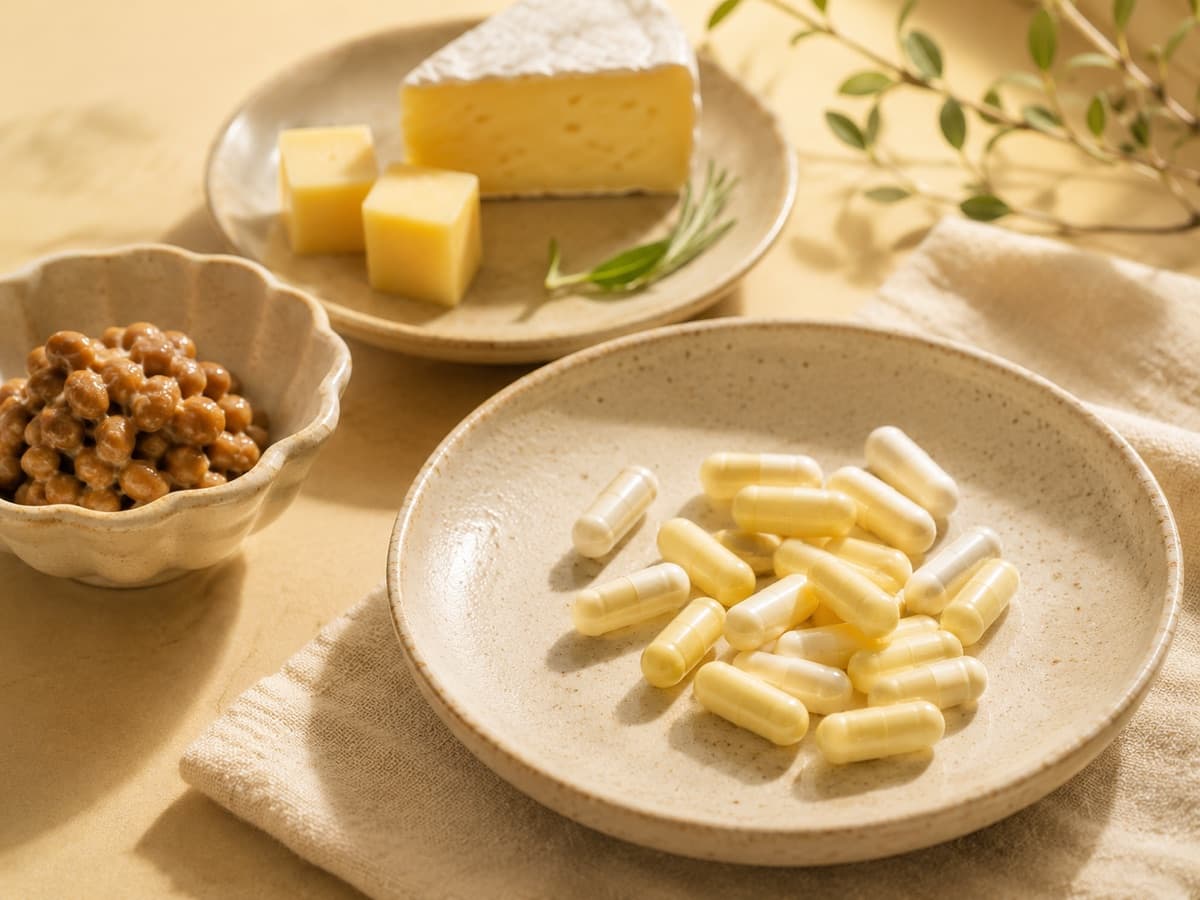
A menaquinone from fermented foods such as natto. In an RCT giving 244 postmenopausal women MK-7 180 µg/day for 3 years, supplementation was reported to slow bone density loss at the lumbar spine and femoral neck and to limit worsening of carotid arterial stiffness. It activates osteocalcin and matrix Gla protein, directing calcium into bone while limiting vascular deposition.
An ingredient with growing research
Buy
(PR)The links below include affiliate links (PR).
Effects reported in research
Slowed bone density loss in postmenopausal women reported in a 3-year RCT
Reported to limit worsening of arterial stiffness
Shown to help direct calcium into bone when combined with vitamin D and calcium
Dosage & timing
- Studies commonly use 90–180 µg/day of MK-7.
- Its long half-life (~72 hours) makes once-daily dosing stable, and it is often combined with vitamin D3.
- One pack of natto (50 g) contains roughly 200–400 µg of K2.
Cautions
- •People taking warfarin (an anticoagulant) must consult a doctor or pharmacist, because vitamin K affects its action.
- •The same applies to those with medical conditions or on other medications.
- •This site is for educational reference only.
Supporting research
Similar supplements
Calcium
Confidence: HighCalcium (calcium carbonate, calcium citrate, etc.)
A key bone mineral. In a meta-analysis of postmenopausal women, calcium supplementation was reported to significantly slow bone mineral density loss at the spine and femur, with the greatest benefit in those with low dietary intake and when combined with vitamin D. High supplemental doses (over 1,000 mg/day) have been linked in some studies to cardiovascular risk.
5-HTP (5-Hydroxytryptophan)
Confidence: Moderate5-Hydroxytryptophan (from Griffonia simplicifolia seeds)
A direct precursor to serotonin, converting more efficiently than tryptophan. Studied for effects on mood, sleep quality, and appetite regulation.
AHCC (Active Hexose Correlated Compound)
Confidence: ModerateAHCC (alpha-glucan from mushroom mycelium)
A polysaccharide complex extracted from Basidiomycota mushroom mycelium. Multiple clinical studies examine its ability to activate NK cells and macrophages to enhance immune function, particularly in cancer treatment support and infection prevention contexts.
Last checked: