
Taurine
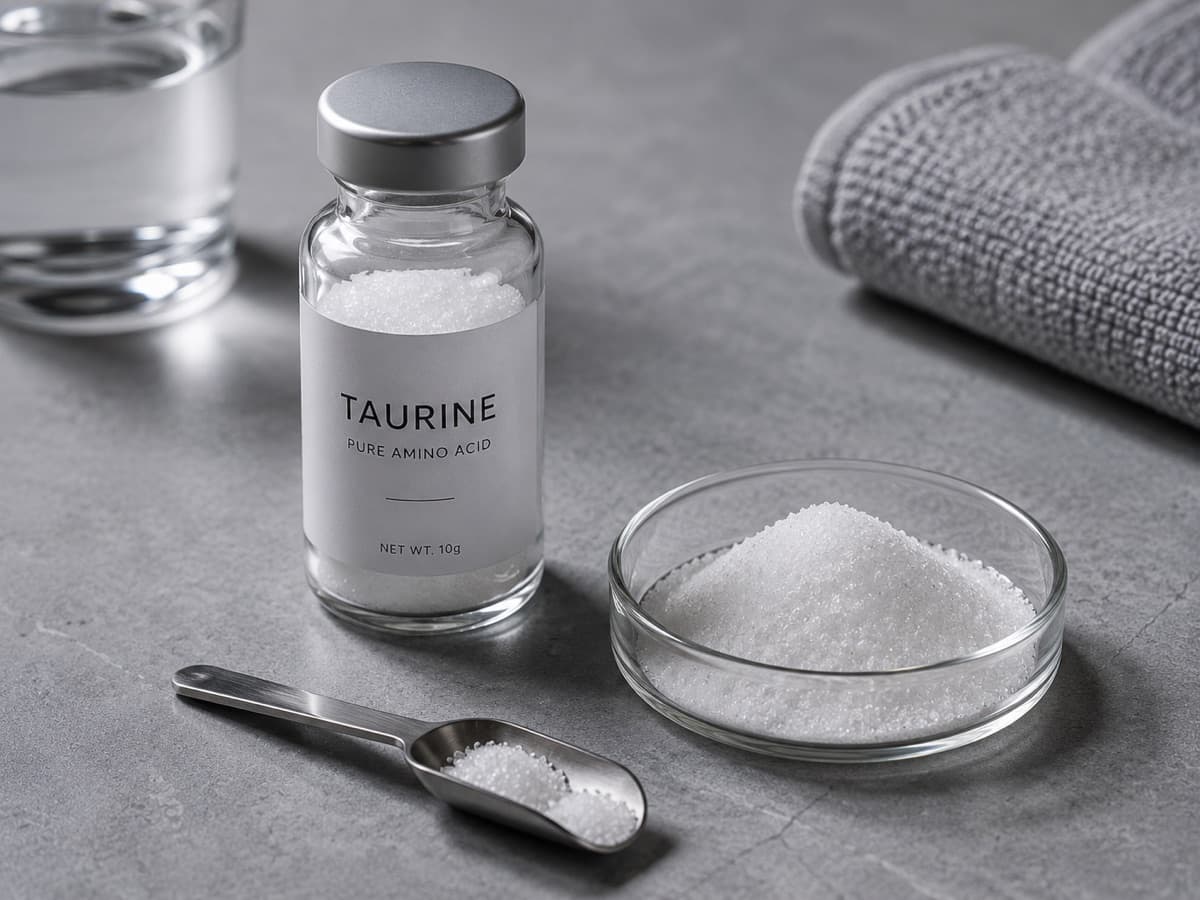
Taurine is a sulfur-containing amino acid synthesized in the body that is known to play roles in antioxidant defense, cell membrane stabilization, and electrolyte balance regulation. Several RCTs have reported improvements in aerobic performance and reductions in post-exercise muscle damage markers and DOMS. While widely recognized as an energy drink ingredient, a growing body of research has examined its effects as a standalone supplement.
An ingredient with growing research
Buy
(PR)The links below include affiliate links (PR).
Effects reported in research
Improvements in aerobic exercise performance and oxygen consumption efficiency have been reported in research
Reductions in post-exercise muscle damage markers (CK, LDH) and delayed onset muscle soreness (DOMS) have been observed
Reduction of oxidative stress through antioxidant mechanisms is expected
Support for muscle contraction function through electrolyte balance regulation has been suggested
Dosage & timing
- The commonly studied dose is 1–3 g per day.
- Many trials have used supplementation 1–2 hours before exercise or immediately post-exercise.
- Taking it with meals may help reduce gastrointestinal discomfort.
Cautions
- •Serious adverse effects are rarely reported at typical doses (1–3 g/day), but long-term safety data at high doses are limited.
- •Individuals with impaired kidney function should exercise caution due to potential effects on excretion.
- •When consuming through energy drinks, be mindful of excess caffeine and sugar intake.
- •Those with pre-existing conditions, pregnant or breastfeeding individuals should consult a doctor before use.
Similar supplements
BCAA (Branched-Chain Amino Acids)
Confidence: ModerateLeucine, Isoleucine, Valine (typically in a 2:1:1 or 4:1:1 ratio)
A supplement consisting of three essential amino acids — leucine, isoleucine, and valine. Multiple meta-analyses report a moderate reduction in delayed onset muscle soreness (DOMS), supporting post-exercise recovery. However, when total protein intake is already adequate, the incremental benefit of additional BCAA supplementation on muscle protein synthesis appears to be limited.
Collagen (Hydrolyzed Collagen)
Confidence: ModerateHydrolyzed Collagen Peptides (Type I/II/III)
A supplement providing hydrolyzed collagen peptides — the primary structural protein in tendons, ligaments, cartilage, and skin. RCTs suggest that co-ingestion with vitamin C may stimulate collagen synthesis in tendons and ligaments. Direct effects on muscle hypertrophy are limited, but research supports its role in joint health maintenance and injury prevention.
CoQ10 (Coenzyme Q10)
Confidence: LowUbiquinone (CoQ10) or Ubiquinol (reduced form)
An essential coenzyme for mitochondrial ATP production, found in high concentrations in energy-demanding tissues such as the heart, liver, and kidneys. Body levels decline with age and statin use; some RCTs have reported benefits for statin-associated muscle pain. Evidence for direct performance enhancement in healthy athletes remains limited and inconsistent.
Last checked: