
Creatine supplementation and cognitive function: a systematic review and meta-analysis
Avgerinos KI, et al.
Evidence is still building up
Summary
A systematic review and meta-analysis examining the effects of creatine supplementation on memory, executive function, and attention. Significant cognitive improvements were found under conditions of high cognitive load (sleep deprivation, psychological stress, aging), but effects in normally rested young adults were limited.
Key findings
- 1
Under sleep deprivation or stress, short-term memory and processing speed significantly improve (ES d = 0.7–1.0)
- 2
Older adults and vegetarians have lower baseline creatine stores, showing more pronounced cognitive benefits
- 3
Cognitive enhancement effects in normally rested healthy young adults are small and inconsistent
- 4
Increased brain creatine improving energy metabolism (ATP recycling) is the proposed mechanism
Related supplements
PR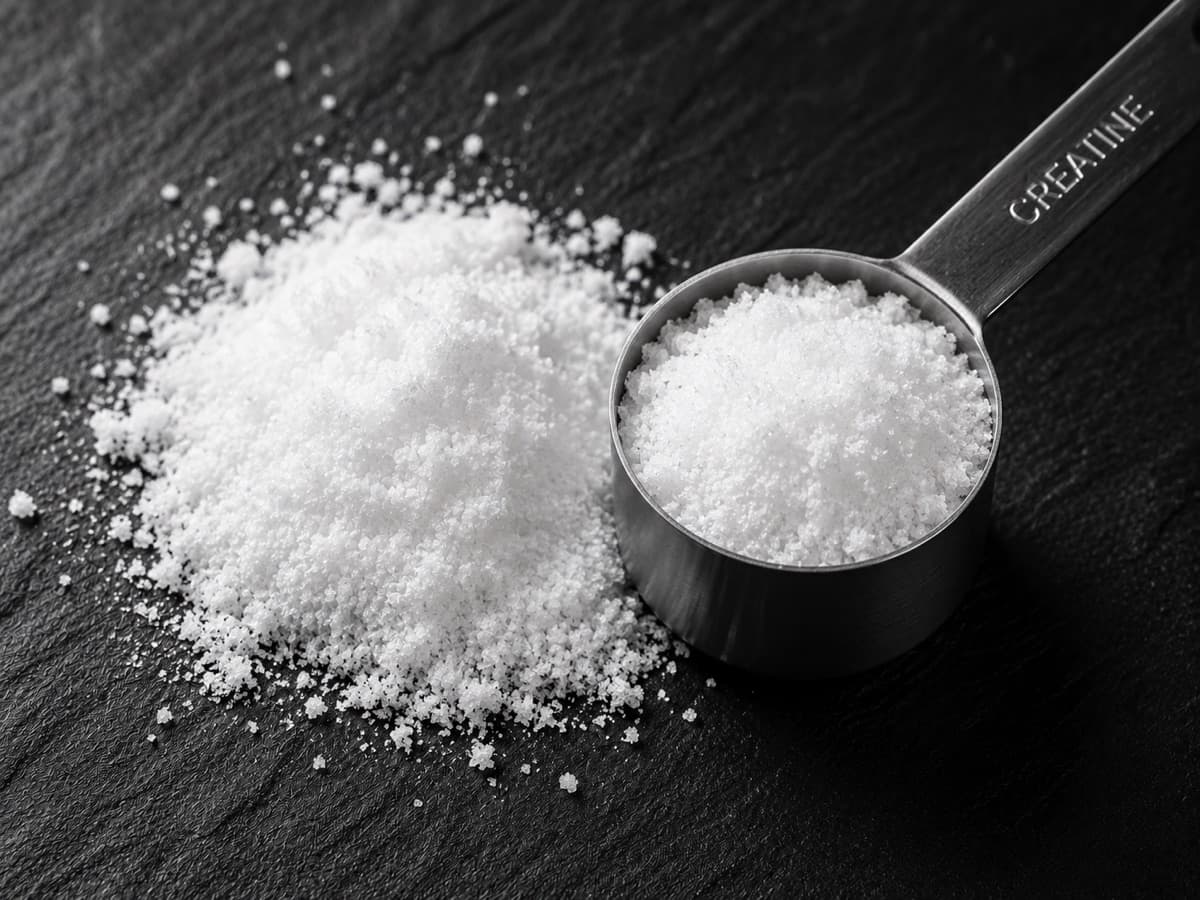 CreatineView in official store
Improved high-intensity, repeated-effort performance
The links below include affiliate links (PR).
Related research
Creatine supplementation augments gains in strength and lean mass from resistance training (meta-analysis)
Open Access Journal of Sports Medicine, 2017
A pooled analysis of RCTs in older adults. Adding creatine to resistance training produced significantly greater gains in lean mass and upper/lower-body strength than placebo.
Comparison of creatine monohydrate with other forms (ethyl ester, HCl, buffered, etc.): a systematic review
Journal of the International Society of Sports Nutrition, 2011
A review comparing creatine monohydrate with alternative forms (creatine ethyl ester, HCl, buffered creatine=Kre-Alkalyn, micronized, etc.) for efficacy, safety, and cost-effectiveness. Creatine monohydrate has the strongest evidence base; no alternative form has demonstrated superiority.
Last checked: