
What is citrulline? How it boosts nitric oxide and exercise performance
Published:
Written by: Shingo YoshizakiReviewed by: Tomonobu Someda
How is citrulline different from arginine — and does it actually improve performance?
Citrulline is an amino acid that serves as a nitric oxide (NO) precursor in the body, and it raises blood NO levels more effectively than arginine because it is absorbed better from the gut. An RCT found that a single 8 g dose of citrulline malate increased bench press repetitions by approximately 53% and reduced next-day muscle soreness by 40%.
What is citrulline? An amino acid that raises nitric oxide
Citrulline is a non-essential amino acid that is converted to arginine through the urea cycle in the body and ultimately used for nitric oxide (NO) synthesis. NO dilates blood vessels, increasing blood flow, oxygen, and nutrient delivery to muscles. It is naturally found in watermelon flesh, but getting effective doses through supplementation is far more practical.
- Non-essential amino acid
- Produced in the body
- Nitric oxide precursor
- Triggers vasodilation
Why citrulline outperforms arginine
Oral arginine is largely broken down in the gut wall and liver before reaching the bloodstream (first-pass metabolism). Citrulline bypasses this degradation, so more of what you take actually makes it into circulation. Studies report that citrulline raises blood NO levels more efficiently than arginine itself — which is the main reason it has largely replaced arginine in pre-workout formulas.
- Higher
- Bioavailability vs. arginine
Exercise performance effects — what the RCT data show
A 2010 RCT (Pérez-Guisado & Jakeman, JSCR) gave 41 trained men a single 8 g dose of citrulline malate 60 minutes before bench press to exhaustion. Compared with placebo, repetitions increased by an average of 52.92%, delayed-onset muscle soreness (DOMS) at 24–48 hours post-exercise fell by 40%, and perceived fatigue was significantly lower. Note that this was a single-dose, short-term study with a relatively small sample size — it is widely cited, but those limitations should be kept in mind.
- +52.92%
- Increase in bench press reps vs. placebo
- −40%
- Reduction in post-exercise DOMS score
- 8 g
- Dose of citrulline malate used
Dose and timing
Research predominantly uses 6–8 g of citrulline malate or 3–6 g of L-citrulline. Taking it 30–60 minutes before training is standard practice; the RCT above used a 60-minute pre-workout window. Because citrulline malate and L-citrulline have different conversion ratios, always check the form on the label — in a 2:1 citrulline malate product, a 6 g serving contains roughly 4 g of citrulline.
- 6–8 g
- As citrulline malate
- 3–6 g
- As L-citrulline
- 30–60 min before
- Pre-workout timing
Safety and considerations
No serious side effects have been reported at typical doses (6–8 g). If you are taking antihypertensive medication, consult a doctor before use, as blood pressure may drop further. The information in this article is for educational and reference purposes only and does not constitute medical advice. Always consult a healthcare professional regarding dose and individual suitability.
Related supplements
PR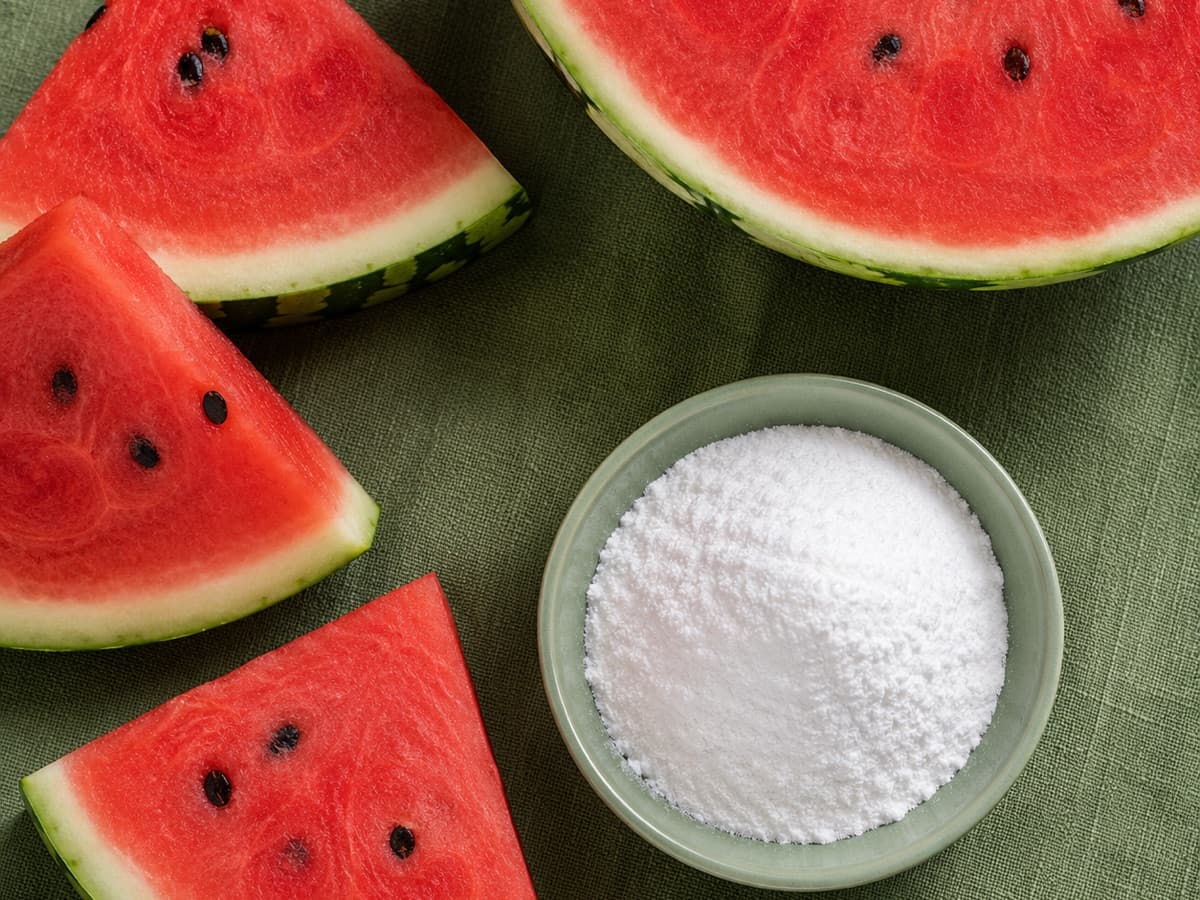 CitrullineView in official store
Improved muscular endurance (increased repetitions confirmed in research)
The links below include affiliate links (PR).
Related research
Sources
Published:

Written by
Shingo YoshizakiSoftware Engineer / Research Writer at BODYDATA
An engineer's job is verification. I read the source before I trust gym lore — same as code.
View profile →
Reviewed by: Tomonobu Someda
Content reviewed from the perspective of coaching practice and supplement-industry experience
Read next
- Explainer
Does Beetroot Powder Improve Endurance? The Science Behind Nitrates and Nitric Oxide
Dietary nitrates (NO3-) abundant in beetroot powder are converted to nitric oxide (NO) in the body, promoting vasodilation and improving oxygen delivery efficiency to muscles. Multiple meta-analyses confirm significant improvements in time-trial performance (effect size d=0.79), with stronger effects in recreational athletes.
Shingo Yoshizaki
- Research vs Bro-science
Is caffeine only for cardio, useless for lifting? Lore vs research
'Caffeine is an endurance tool — it doesn't help your max lifts.' We test this common line against the research on maximal strength, dosing, and tolerance. This time the lore loses a round.
Hirotsugu Yoshimura
- Explainer
Taurine Supplements: Effects on Endurance and Muscle Fatigue
A meta-analysis found moderate evidence that taurine supplementation (1–3 g/day) significantly improves endurance (time to exhaustion). Effects on strength are weaker, but taurine has a strong safety profile and is worth considering for a wide range of athletes.
Shingo Yoshizaki