
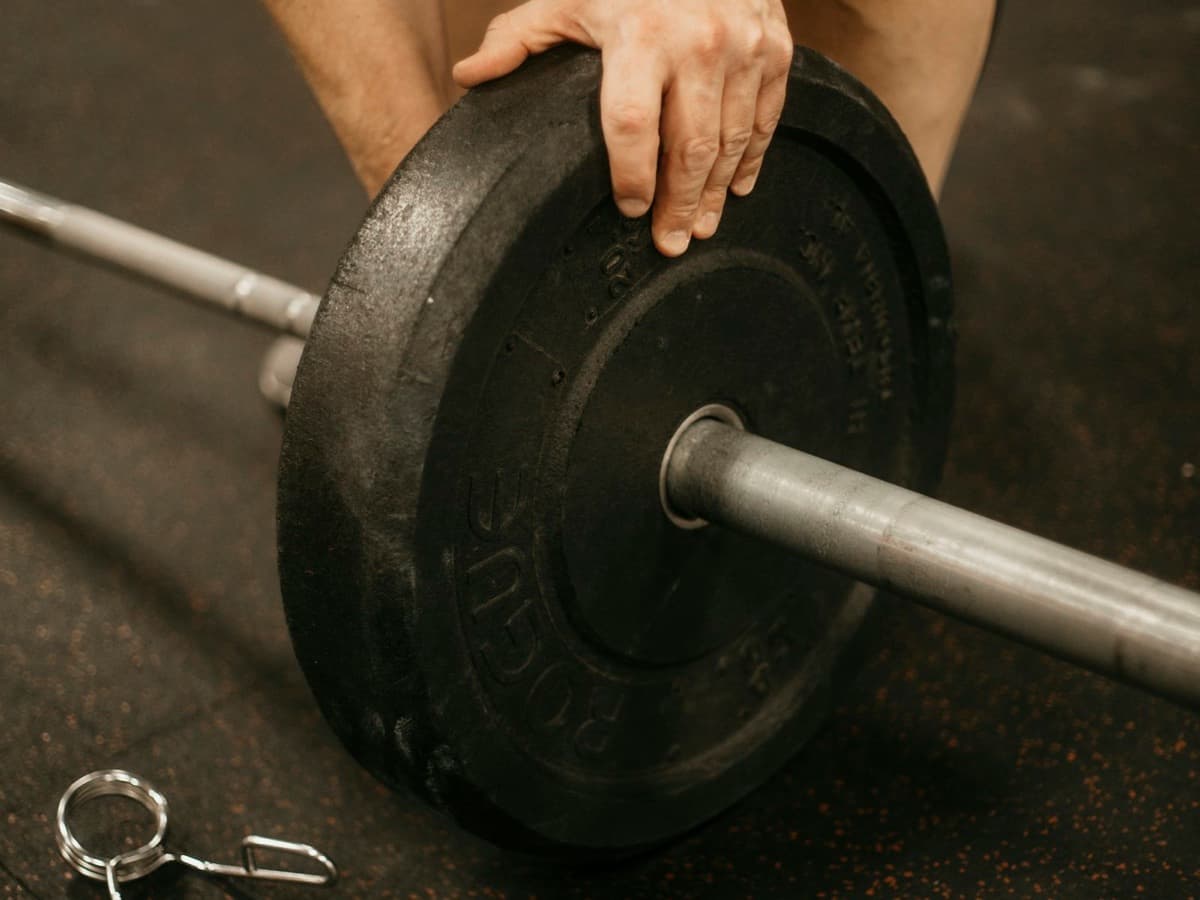
Can You Actually Build Muscle with Bodyweight Training Alone? The No-Weights Myth vs. Research
Published:
Written by: Shingo YoshizakiReviewed by: Tomonobu Someda
"You can't build real muscle without weights" — this belief keeps many people gym-dependent. But when you look at what actually drives hypertrophy, the type of resistance matters less than you might think.
Let the data settle it.
Can bodyweight training alone produce meaningful muscle hypertrophy?
What's said
ウェイトトレーニング重視コミュニティ・フィットネス文化
Without dumbbells or barbells, you'll plateau fast. Bodyweight is just too light to provide the mechanical tension needed for real muscle growth. You need real weights.
What research says
- Kikuchi & Nakazato (2017) found that appropriately loaded push-ups produced similar hypertrophy in triceps and pectorals as low-load bench press.
- The fundamental drivers of muscle growth — mechanical tension, adequate volume, progressive overload — don't require iron plates.
- Advanced bodyweight movements like pistol squats, one-arm push-ups, and front levers can generate substantial mechanical tension.
Bodyweight training can absolutely build muscle. What matters is sufficient load and progressive overload — not whether the resistance comes from iron or your own body.
Does bodyweight training hit a ceiling for advanced trainees?
What's said
ストレングス系コミュニティ・パワーリフティング系情報
Bodyweight training works for beginners, but experienced lifters quickly outgrow it. At an advanced level, you need increasingly heavier external loads — bodyweight-only will plateau you.
What research says
- Advanced trainees adapt quickly and face a narrower window for progressive overload within bodyweight movements.
- Adding load (weighted vest, rings, harder variations) extends the ceiling, but maximum lower-body strength and hypertrophy often benefits from external loading (barbells).
- Pure bodyweight makes sense for specific sports, but combining with weights is generally more efficient for peak hypertrophy.
Advanced trainees do face progressive overload challenges with bodyweight alone. Combining with external loads is more efficient for peak hypertrophy. But with creativity (weighted vests, harder variations), bodyweight training has plenty of room to grow.
Related research
- Low-load bench press and push-up induce similar muscle hypertrophy and strength gain2017
- Strength and Hypertrophy Adaptations Between Low- vs. High-Load Resistance Training: A Systematic Review and Meta-Analysis2017
- Dose-response relationship between weekly sets (training volume) and hypertrophy (systematic review)2017
Sources
Published:
Written by
Shingo YoshizakiSoftware Engineer / Research Writer at BODYDATA
An engineer's job is verification. I read the source before I trust gym lore — same as code.
View profile →
Reviewed by: Tomonobu Someda
Content reviewed from the perspective of coaching practice and supplement-industry experience
Read next
- Research vs Bro-science
Do You Have to Get Fat First to Build Muscle? Myth vs Research
'You have to bulk up first to build muscle' and 'you can't gain muscle without gaining fat' are stubborn beliefs around bulking. But is getting fatter really a prerequisite for hypertrophy, or is it possible to add muscle while keeping fat gain to a minimum? We test this using research on body recomposition and rate of weight gain. While our existing article on dirty bulking covers how to eat during a bulk, this one asks a more basic question: do you need to get fat at all?
Hirotsugu Yoshimura
- Research vs Bro-science
'You Can't Get Big Without Training Legs' — Myth vs Research
'Skip leg day and your upper body won't grow either,' 'the growth hormone and testosterone from squats and deadlifts build your whole body,' 'legs are your foundation, so without them you won't build a frame.' Leg-day devotion runs deep in gym culture. But is training legs really the key to upper-body growth? Using research on hormones and muscle mass, we separate what's right from what's wrong in this belief.
Hirotsugu Yoshimura
- Research vs Bro-science
"Can't Build Muscle After 40" — Myth or Reality? Aging vs. the Research
"I'm too old to build muscle" — a common refrain from trainees in their 40s and 50s. Testosterone and growth hormone do decline with age. But is the muscle-building window actually closed? The research says otherwise.
Shingo Yoshizaki